Search Engine

Followers

Tuesday, August 19, 2014

To resign or not to resign


Points-of-view (POV) of a non-corporate person:

The CEO of MRT Corporation resigned after the fatal accident at one of its construction site. I noticed two reactions among friends:
1. Those who applaud the resignation as a sign of accountability a la Japanese leaders.
2. Those who criticised the resignation as an easy way out of a mess.

From my POV, the resignation is unavoidable as it is a sign of accountability. However, the timing of the resignation is also important. The following are my quick thoughts:

1. The incident at the construction site requires an extensive investigation. Many questions must be answered. Was it an "accident" after all measures and procedures are in place and followed? Was it the result of negligence at the construction site? Was it human error or machine failure? Was it a result of an embedded systemic failure? To me, if the incident occurred after all necessary systemic fail-safe measures are in place, then it was an accident that does not warrant the hasty resignation. However, if it was negligence or a result of systemic failure that is neglected, then the resignation is a sign of accountability.

2. Would it be fair to leave the "mess" to be cleaned up by someone else? At the very least, I believe that the person in charge should at least identify what went wrong before leaving, instead of leaving for the successor to identify the cause of the problem.

3. A good leader is measured not by the lack of problems, but how he/she handles the problems. In most situations, running away from problems does not make a person a good leader. Resigning is often perceived as running away. A resignation also does not restore confidence in the company, although it would pave the way for someone who could.

4. At the same time, it is imperative that the process of identifying the problem should not be done in a manner akin to sweeping the problem under the carpet. If this happens, then the problem would not be solved or resolved. The clean up process should present solutions, not be a way to hide the culprits, hence eroding the value of integrity and accountability.

5. Resignation should not be done in haste, nor should it be delayed if the person is indeed accountable. Timing is of the essence in determining when to leave. Leaving too soon, and people will see you as someone who runs away from a problem. Holding on for too long, and people will see you trying to stay in power and try to hide something.

Al-Fatihah to the three workers who lost their lives.

Sunday, August 17, 2014

Cobwebbed blog

Facebook is really killing off blogs (at least for me).

This blog of mine is full of cobwebs (metaphorically speaking).

I wonder if I should get back to blogging?

Tuesday, October 29, 2013

Bandung - Day 2

The second day in Bandung, which is also the first day of the conference, was spent mainly in the hotel itself. The whole day was full with plenary and parallel sessions of academic presentations. It is interesting to note the seminar culture in Indonesia. I personally find the Indonesians to be more active and participative during the question-and-answer sessions. They have a lot of questions, as well as opinions on the papers presented, which certainly makes the whole thing lively and interesting.

After the first day of the seminar ended, at around 6 p.m., the delegated from outside Bandung were taken to the official residence of the Walikota of Bandung. Walikota is the local term for mayor. The current Walikota, M. Ridwan Kamil, an architect by profession, was just elected to the post less than a month ago. He welcomed us for dinner, and made a short speech. However, he himself was not able to join us for dinner, as another group was waiting for him at another location in the premises. (If anyone was keeping abreast with what was happening in Indonesia, the labourers in the country went on strike to demand for minimum wage, and the Walikota had a discussion with a group of them that evening).

In brief, this was what transpired on the second day. Some of the Malaysian academics had presented their papers. My turn awaits tomorrow.

Monday, October 28, 2013

Bandung - Day 1

The journey to Bandung got off to a delayed start, or to be exact, four delayed starts. The flight which was scheduled at 3 p.m. was delayed to, initially, 5 p.m. Just as I was about to leave the house for the airport around 10 a.m., I got a notification from the airlines that the departure time was rescheduled to 6 p.m. I eventually left my home just before noon, taking the LRT to KL Sentral Station, and from there, took the airport bus. I checked in around 3 p.m., and shortly thereafter, I got information that the flight was further delayed to 6.30 p.m. In any case, we finally took off around 6.50 p.m. There were a number of academics from the University of Malaya on board the same flight.

This is my first trip to Bandung, and I did not really have much expectation. All I know is that Bandung is well-known as a shopping haven. As I am not the shopping type, this was not on my agenda. After all, this is a working trip. I am attending the International Conference on Islam in the Malay World, co-organised by Universitas Islam Negeri Sunan Gunung Djati of Bandung and the Academy of Islamic Studies, University of Malaya. This is the third annual conference, with both Bandung and Kuala Lumpur taking their turns to host the event. I have a paper to present on the second day, and that would be my main focus of this trip.

The time difference between West Indonesia and Malaysia is one hour, with Malaysia being ahead. We arrived in Bandung just before 8 p.m. local time. The host provided a coaster (minibus) to shuttle the Malaysian delegates from the airport to the Bali World Hotel where we stayed and where the conference is held.

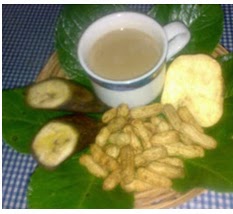
When we arrived at the hotel, I got my first taste of local food, to be exact Sundanese food. The people of Bandung are mainly Sunda people, or Sundanese. The food here to me is quite interesting. What I enjoyed was boiled potato and boiled peanuts, and the drink that went with these, known as bajigur, is certainly an eye-opener. Bajigur is a sweet drink served hot, made from brown sugar and coconut milk with slices of young coconut meat.

After that, I checked into my room, and looked forward to a good night's rest. The first day of conference awaits when the new day begins.

Destination Bandung

It has been a while, over a year to be exact. In just over twelve hours time, insha-Allah, I will be travelling again. This time to Bandung, Indonesia for a conference hosted by Universitas Islam Negeri Sunan Gunung Djati (UIN SGD). I did not travel overseas during my first year of service, but now, just under two months into my second year, I will be going overseas for the first time as a university academician.

Truth be told, I am not sure what to expect. This is my second Indonesian trip. The first trip was over a decade ago, and it was to Padang in Sumatera. I will be in Bandung from Monday and will be returning to Malaysia on Thursday.

If I have the opportunity, I will be updating my blog and Facebook page from Bandung.

Saturday, October 19, 2013

University students: Then and now - Part 1

I was a university student in the 1990's. Things were very different then. Today, I am a university lecturer, and as such, it is only inevitable that I jot down this observation. This is part 1 of an as-yet-to-be-decided length of posting on this topic.

#1: Taking notes
Then:
There were three types of lecturers back then (at least the ones that I encountered). First, a lecturer who literally gave a lecture - no notes, no slides, only a list of books as references at best. Second, a lecturer who used the blackboard. Yes, a blackboard. Whiteboards were expensive back then. And third, a lecturer who used slides and the OHP (that's overhead projector, for the uninitiated). The OHP was the state-of-the-art technology for lecturers in the 1990's. Regardless of the type of lecturer that you get, students would have to take down notes. If the lecture is a full two or three hours, that would be two or three hours worth of note-taking. Of course, you could always compare notes with your friends, just in case you missed something. Students would try their very best not to miss lectures because of the fear of missing out on things. Students would never dream of going up to the lecturer and asked for the lecture notes.

Now:
With the advent of ICT, lecturers these days would use PowerPoint presentations. Some would opt for the use of a visualiser. Of course, there are whiteboards as back-up, just in case there are technical difficulties. Lecture notes and slides are usually put up on e-learning portals. Students virtually has no need to take down notes. They just need to attend the lecture and listen. There are also students who have taken the initiative to download the notes and bring the notes to the lecture. They would then highlight the important points or even jot down some extra points given in the lecture. Some would record the lecture using their smart phones. If there are some important slides which the lecturer purposely did not include in the notes uploaded on e-learning portals, students can just as easily take out their smart phones and snap the picture of the slide. Some would upload the picture on Facebook in order to share the information with their friends who did not attend the lecture. Some even more daring students would come up to the lecturer and ask for the softcopy of the notes (even when the notes are already up on the e-learning portal).

My observations:
1. Note-taking skills are almost non-existent among students today. Most are unable to listen and write at the same time. Even more absent is the ability to distil the information given in the lecture, and discern what is important and what is not.
2. Technology is a good aid in teaching and lecturing. As a lecturer, I find technology to be very useful to both lecturers and students. However, both sides must be smart and wise in utilising technology. Over-dependence on technology can be problematic. One apparent problem is that some students feel that they should be "spoon-fed", and there seems to be no effort on students to look for information themselves.

Regardless of the advances in technology that we have today, I think note-taking skills are still very important. This is one skill that one has to have, and this should be present in students today. Whether one realises it or not, note-taking skill is crucial when one enters the real world. Unfortunately, technology has rendered this skill unimportant. 

Thursday, October 17, 2013

Travelling again

It has been over a year since I travelled anywhere. The last time was to Hamburg, and that was in June 2012, a few months before I joined the university as a full time academic staff. Now, due to my academic commitments, I will be travelling again.

At this age, frankly, I prefer not to travel too much. That is why I feel three overseas trips in the span of four months can be overwhelming. In between these, I have two domestic outstation trips. Nonetheless, I try to think positive. At the very least, the trips will provide some new experience. Hopefully, I will be able to establish some networking as well.

At the end of this month, I will be off to Indonesia - specifically, Bandung - to attend a seminar co-organised by Universitas Islam Negeri Sunan Gunung Djati (UIN SGD) and the Academy of Islamic Studies, University of Malaya. I will be presenting a paper there.

At the end of December, I will be heading to Tokyo, Japan to attend a conference co-organised by Waseda University and the Asia-Europe Institute, University of Malaya. I am also scheduled to present a paper in this conference.

Less than a couple of weeks later, I will be flying to Hamburg, Germany to attend an international workshop on bioethics organised by Universität Hamburg and the University of Oxford. The workshop will discuss and review a number of papers, one of which is co-written by myself, to be published in an international journal called Die Welt des Islams (translation: Journal of the Study of Modern Islam).

In the middle of these international trips, I will be going to Gambang in Pahang to give a short briefing on a research project on organ donation, and later to Kota Bharu in Kelantan to give a lecture as part of a master's course at the university's Nilam Puri campus. These two will take place in November.

I am also involved with at least three seminars as co-author of papers - one in Nilai, Negeri Sembilan; one in Kuala Terengganu, Terengganu; and one in Kuala Lumpur. Fortunately, my co-authors will be presenting the papers.

In many ways, I am enjoying my life as a full-time academic. It reminds me of the days when I was with the Institute of Islamic Understanding Malaysia. I am now in my second year at the university, and looking forward to many more years here. Insha-Allah.

Tuesday, October 15, 2013

Informed opinion, not just any opinion

I have been away from blogging for far too long. During this period, I mainly jotted down my thoughts in short simple sentences on Facebook. It is quick, and it can be done almost anytime, anywhere.

After today, I have changed my mind. There are things, I suppose, which are best suited for blogs.

I was at a function today in conjunction with Aidiladha. I was sitting with a professor who is well-renowned in his field. I have known him for quite some time, and am quite acquainted with his "eccentricities". The professor is known as someone who is combative, opinionated, and critical. In many ways, he is considered to be an alpha male in any group he is in. He likes to pose difficult questions, forcing us to think - and rethink - our position.

I have met a few people who are like this. I find them intriguingly fascinating. Many a times, I find myself "challenged" by these people, something that rarely happens, truth be told. Whenever I feel challenged, I would force myself to up the ante. In other words, this would become a catalyst for me to improve myself.

Those who know me well would know that I hate to engage in rhetorical debates. I prefer to put my thoughts in writing, either on paper or electronically. Whenever I am in a situation where a debate takes place, I would usually listen and absorb all the arguments, before giving it some time to think the points over and refer to various thoughts on the matter being debated, analysing the points over and over, before finally synthesising my thought.

It is frustratingly time consuming, I know, but that is how I work. I would not give spontaneous reactions unless the subject is something that I am really familiar with. If the subject is new, I do not see myself in the position to give an opinion, unless and until I have studied the subject matter thoroughly. I do not want to give an opinion that is half-baked or based simply on emotions. I would prefer to give informed opinions, instead of merely being opinionated.

Many a times, I keep my opinions to myself. That will change, insha-Allah.

After today, I am convinced that I have to voice out my opinions. I may not be an orator, but I can certainly put down my opinions in writing. That is the point of having this blog in the first place.

And so, I will put down "my thoughts on stuff" from hereon, hence effectively reactivating the blog TeropongSkop. Salam Aidiladha to visitors and readers (if there are still any left) of my blog.

Sunday, August 18, 2013

Facebook killing blogging


I have not blogged for almost eight months now. And I blame Facebook. That, and my lack of enthusiasm to blog down my thoughts. Maybe, I will start blogging again.

Maybe...


Monday, December 31, 2012

The day the wall came down


Yes, I know. The title may sound a bit dramatic. But I can assure everyone that things are taken very seriously right here in Setiawangsa.

Late Friday evening, around 10 p.m., part of the retaining wall at Bukit Setiawangsa came falling down. I got a call from my uncle asking me about this as his daughter's friend tweeted about this incident. At that point in time, I was at home at Taman Setiawangsa which is further down from where the landslip took place. Upon checking Twitter and Facebook, I found that, yes indeed, the wall had come down. If this happened before the era of the social media, I am sure many would still be in the dark about the incident, and that news would not have spread that fast.

Speaking of being in the dark, I called up a friend living at Puncak Setiawangsa. Apparently the whole area of Puncak Setiawangsa went dark. He told me that the police had asked them to leave their homes and be outside the house. When I told him that there had been a landslip, he was not in the know at that point in time. Some ten minutes later, he called me back, and confirmed that there was a landslip slightly further up from where he lives.

Credit should be given where it is due. The police, fire brigade, local authority and residents all acted promptly and swiftly. No lives were loss, thankfully. But property damage is definitely huge.

As of today, the affected house at the edge of the peak is being demolished. This started earlier today and is still ongoing. Two other houses may be demolished as well. In the meantime, the experts are studying the soil movement in order to rectify the problem.

Those who had to be evacuated are still awaiting news. Those living near the affected area are definitely nervous. News (both factual and sensational) on this matter are everywhere.

In a way, it is good that people take notice of the incident. I am just hoping for several things:

  1. Hopefully, this incident will not result in finger pointing and accusations because this will lead nowehere. Find the cause of the problem and remedy it for the safety of the residents in the area.
  2. For the past two decades, there have been numerous incidents of landslips and landslides around the Hulu Klang area. Some of the incidents involved the loss of lives. Most of the times, people forget about these incidents after a few weeks. I hope that this incident will not be seasonal in nature. We should not talk about it only when it happens, and forget about it after things have quieten down. There are many high risk areas around the Klang Valley. There must be continuous efforts to ensure the safety of these areas.
  3. If there are weaknesses in the system, identify and improve them. I find it rather disturbing that the report made by the affected tenant of the house several days before the actual landslip was not acted upon promptly. Reports such as this should be looked at seriously by the authorities.

As it is now, I am hoping that the situation will improve. Everyone gets the jitters each time it rains here, as this will definitely increase the risk of the soil collapsing further. So far, things seem to stabilise and everyone is praying that it will continue to be so, until the problem is rectified (soon, hopefully).

What a way to end 2012.

Friday, December 14, 2012

Sinking ship

This is a fictitious story of an ill-fated ship. 

Before the ship set sail, the captain of the ship succeeded in gathering the best of crew members he could find. They were a skillful and dedicated lot, willing to do more than what is asked of them. The journey was long and perilous, but they all managed to overcome whatever dangers that come their way.

After sailing for three years, they noticed that the ship's supply was beginning to dwindle mysteriously. The first officer who had been with the captain even before the ship began its voyage, was the first to suffer. He had to go without food for days at end, just to ensure that the other crew members had enough to eat. Strangely, the captain did not have that problem. He seemed to have all what he needed, all in the comfort of his lofty cabin.

Some crew members started talking, and the captain did not like it. A few of the crew members were dismissed, and they were left on small remote islands. The rest of the crew members decided not to speak anymore for fear of being marooned on deserted islands.

The suffering of the first officer continued. He was left fending for himself while the captain seemed to be very comfortable. It was around this time that the first officer started to feel suspicious. It was also around this time that he noticed that the ship was sinking.

He alerted the crew members who did what they can to contain the leaks. But the holes became bigger and bigger, while the captain seemed to be comfortable in his cabin, as if oblivious to the problems. Whenever told of the problem, he would always say, "I am busy thinking of the solution." Yet, the solution never came. He went on living in his own world, so to speak, comfortably pampered in his luxurious cabin.

The first officer, who had been left fending for himself without food, decided that enough was enough. He took it upon himself to leave the sinking ship. One night, he took a small boat and sailed away. He was rescued by a huge sailboat.

The first officer did not forget the fate of the crew of the ship that he left. He tried to bring them on board to the new ship whenever there was an opportunity. Other crew members also started to leave one by one. The captain did not seem to care. The only thing that he said was, "Everyone is a grown up. You are old enough to decide what is best." His words were cold as if he did not care what was happening to the ship or the crew.

At the end of the day, no crew members were left on the ship. The only one left was the captain - still feeling comfortable in his luxury cabin.

And when the ship finally sank, the captain was left on his own to sink with ill-fated ship.

And no one missed him.

Not one bit.

This is a fictitious story of an ill-fated ship. 

Thursday, December 13, 2012

Put your wealth not in your heart

Several years ago, someone I know said to me, rather proudly, "I once had a million ringgit." At that point in time when he said those words, he no longer had such amount of money. On the contrary, he was borrowing money from people just to keep up with his rather lavish lifestyle.

When a mutual friend passed away, he asked me for RM1,000 on the pretext of borrowing it to help out the family of the mutual friend. At that time, I was also in some difficult times, but I helped out because I felt the need to help the deceased friend's family. I just smiled when the friend who asked for the "loan" gave the money to the widow as if the donation came from him personally. Never mind, I said to myself. The person who provided the money to the person who handed the donation would surely be bestowed with even greater rewards from Allah SWT. Even to this day, I hold firmly to this belief.

This debt was never recovered. My conscience is clear. Even if this particular loan was not repaid, I regard it as my own donation to the deceased friend's family. True enough, five years on, the qard al-hasan remained unpaid. Instead, the debt grew. Promises were made, only to be broken. I could list down all the empty promises made, but I won't. Suffice to say that with more promises made, the level of trust eroded slowly but surely.

What saddens me is that he does not even show a sense of guilt. He goes on living lavishly on, what some people may argue, other people's money which is due to them. People talk, and people will continue to talk. And this friend goes on living as if people are oblivious.

He also once told me that people will look up to others because of two things, i.e. the car you drive and the shoes you wear. Both these things, according to his materialistic philosophy, will open up gates and doors to important people and opportunities.

Frankly, I could not care less about what car a person drives or what brand of shoes one is wearing. The car I drive is based on the needs of my family. I don't buy cars because of their brand names. Why drive a Mercedes when I cannot afford it and if it does not serve my purpose? If you can afford luxury cars and shoes, by all means, go ahead. If, on the other hand, you are like me, a pair of Bata shoes costing RM50 will last me for up to two years. If you don't believe me, just take a gander at my shoes the next time you see me.

One of the things I hate in life is owing people something. If I have debts with other people, I will have difficulties sleeping. When the debts are repaid, I find myself at peace. That is why I will do my very best to avoid borrowing money from people. Even when the need arises, I will make it a point to settle it as soon as possible.

I do not want people who help me during my times of need having to ask for what is rightfully theirs. Worse still, I do not want people to feel like beggars when they ask about their repayment. Unfortunately, this is how I feel each time I inquired about the money that is owed to me. The creditor should not be made to feel like a beggar. It is the debtor who should feel guilty for not paying up.

I know this is very much a personal jotting. But please allow me to use this blog as an avenue for me to put this down. It is not my intention to put anyone down. I just feel that there is great injustice in the way some people act.

Even if one has a mountain full of money, the money will certainly run out if one is lavish. If one borrows money just to cover his lavish lifestyle, at the end of the day, one will have debts the size of a mountain instead. No doubt, money is important. But if one puts money as one's priority, one will end up getting addicted to it.

I like what I read somewhere that gives the advice: "Put your wealth in your hands and not in your heart." In other words, you should control your wealth, and not let your wealth control you.

After much thought, I figured that this friend must have put his wealth in his heart, otherwise he would not only still have his million, but also would have doubled or tripled his million. 

Monday, December 10, 2012

New novel "Detik" is out

After a long break from creative publication, my third novel is finally out. Technically, I finished writing this novel late last year. The manuscript was submitted for a science fiction writing competition. When the result was announced last Thursday, my novel clinched third place.

I am most grateful for this interesting experience. I have never written a novel for a competition before, so being able to clinch a place is a bonus. In many ways, this achievement has pumped up my spirit to continue writing creatively.

The novel is now in major bookstores in the country. It is called Detik, a story that I can only describe as debating the ethics of time travelling.

Get a copy, and enjoy the reading journey.

Tuesday, October 30, 2012

Gardening

Ever since I was a young boy, I enjoy gardening. This is a favourite hobby of mine until about five years ago. When I started doing my Ph.D. in 2007, gardening no longer became an activity. It was more of a distant memory of years past.

Last week, after nearly half a decade, I decided to start gardening again. It was then that I realised what I have missed all these years. Weeding, pruning, feeling of having soil in between your fingers... I did not realise how much I miss all these until I started doing them again.

Gardening also helps me to relax after a long day. And it is much easier to sleep at nights too.

Saturday, October 27, 2012

One journey ends, another one begins

It took me over a month to recover from all the excitement. It started with receiving the job offer at Universiti Malaya. I made the move to the oldest university in the country on the 3rd. of September. A few days earlier, on the 29th. of August, I got a call very late in the afternoon informing me about the date and time for my viva voce, which was on the 4th. of September. With that over, I had less than three weeks to do the minor corrections so as to enable me to join the convocation on the 1st. of October. Alhamdulillah, I managed to have them done and was one of the 353 Ph.D. graduates from Universiti Malaya for 2012. Amidst all the happenings, my sister also graduated with a B.Sc. (Hons.) from the International Islamic University Malaysia on the 7th. of October.

All these events actually was pretty hectic for me. I rarely get online at nights these days. By the time I get home, I am pretty much tired and opt to rest rather than sit in front of the laptop. Since the thesis is done, I don't have any valid reason to stay up unnecessarily. Most of my work can be done at the university, something that I cherish at this age. I can spend more time with my family, especially my two boys, at home.

Of course, one chapter of my life's journey has ended. Now another chapter begins with my tenure at the university as a full time academic. So far, I am relishing in the joy and challenges of being an academic. Hopefully, whatever tests that may come my way, I will be able to handle them with wisdom, insha-Allah.

Friday, September 07, 2012

Journey's end

There is only one word that I could utter when my viva voce session was over late Tuesday afternoon: Alhamdulillah.

I received a call from the Faculty of Science just after 6 p.m. last Friday informing me that my Ph.D. thesis defence has been set on Tuesday, 4th. September 2012 at 4 p.m. I later found out that there were two other candidates before me, one in the morning and another at 2.30 p.m.

In many ways, I was relieved that the day was finally set. It has been a long time waiting. The thesis was completed way back in May 2011. However, because of some bureaucratic problems (which I do not want to think too much about), I was only able to finally submit the thesis in June 2012. Things went pretty smoothly after that. The examiners were appointed promptly, and all three of them handed in their "verdicts" on time just before Aidilfitri.

Of course, when Tuesday came, I became anxious. I was finally at the end of a long journey. My last hurdle, so to speak, was the viva voce session. The candidate before me went in at about 2.30 p.m. and he only came out of the meeting room at 4.15 p.m., overshooting his scheduled time. Apparently, I was told later, many questions were being asked by the panel members.

I only went in around 4.45 p.m. and was duly asked to do my presentation. My presentation went on for about 15 minutes, followed by a Q&A session which lasted for 10 minutes, which by all accounts was quick. Having said that, the 10 minutes must have been the longest 10 minutes that I have ever felt.

In retrospect, the session went pretty well. It was quick and as some of my friends pointed out, painless. I came out of the meeting room feeling a huge burden on my shoulders finally have been lifted. It was a great relief that is difficult to describe.

I was called back into the meeting room at the Dean's office about five minutes later. I was informed that I passed with minor corrections. Officially I am given three months to complete the corrections, but the Dean wanted me to hand in the completed and corrected thesis within two weeks time. This is due to two reasons. Firstly, there were not that many corrections that need to be done as they were very minor. Secondly, this will enable me to join the convocation ceremony on 1st. October.

Now, my task is to get the corrections done, have them verified by my supervisor, and submit the thesis to the university.

As I wrote earlier, I can only utter the kalimah tahmid as a sign of satisfaction and relief. I am thankful to Allah SWT for the strength that He has given me to go through this five-year academic journey that taught me patience and perseverence, and has even made me more mature along the way. I am also thankful for my family members who have provided the support and understanding throughout my Ph.D. journey. I am also very grateful to my supervisor for her wisdom and guidance.

This has been a very interesting journey. It has now come to an end. But the end of this journey means that a new journey has begun.

Thursday, August 30, 2012

The move

I have been hinting about this for quite some time, and the latest was in the blog posting here. In fact, truth be told, this was something that I have been seriously contemplating on since I went to Makkah in 2010.

The time has now come for me to move on. I have decided to leave my cushy job as Executive Director at Yayasan Ilmuwan, and jump full time into the academic world as a full-time academic. Today is officially my last day at the Yayasan.

My supervisor, Professor Datin Dr. Azizan Baharuddin, has been egging me on to make the jump for the past five years, I think. I have been taking my time before finally deciding to do so this year. I have been hesitant, yes, but not because I do not fancy the challenge, but rather I have to make sure that my decision will not have negative impacts on my financial standing to support my family. As the main breadwinner of the family, I have to be very certain that this career jump is beneficial in the long run.

I started working in 1996, beginning with the Malaysian Strategic Research Centre (MSRC), for about one and a half years under Dr. Abdul Razak Abdullah Baginda. It was here that I learnt the basics to conducting research, thinking critically and analysing events. I also learnt a lot for being directlty under Professor Datin Dr. Kobkua Suwannathat-Pian, a renowned historian, at MSRC.

Then in 1998, I moved on to the Institute of Islamic Understanding Malaysia (IKIM) for nearly eight years. I had the benefit of learning from people like Professor Dato' Dr. Ismail Haji Ibrahim, Professor Datuk Dr. Abdul Monir Yaacob, Datuk Dr. Syed Ali Tawfik Al-Attas, Datuk Nik Mustapha Nik Hassan, Professor Dr. Abu Bakar Abdul Majeed and Encik Mazilan Musa - all of whom I consider my mentors and teachers in research and academic writing. I was also privileged to be able to work under the then-Chairman of IKIM, Tun Ahmad Sarji Abdul Hamid, under whom I learnt some useful management techniques which I apply to this day. It was also here that I was exposed to the media, both print and electronic, as well as to international and local conferences and seminars.

I then moved on to Yayasan Ilmuwan in December of 2005. In terms of pace, it is basically more relaxing as things were "quieter". My vow was to get the newly-formed organisation up and running. Now that things are running, I guess it is the best time as any for me to make my next move...

...which is to Universiti Malaya.

I guess anyone who knows me well enough should find this hardly surprising. Universiti Malaya has been very close to my heart for many years now. This was where I did my M.Sc. in history and philosophy of science. This is also where I am at the tail-end of my Ph.D. (waiting for my viva voce which should be very soon). This is also the place where I found my love in lecturing.

As such, I will be starting on the 3rd. of September as Consultant Expert at the Programme for Applied Sciences and Islamic Studies at the Academy of Islamic Studies of the university. I look forward to the new challenges ahead. I know things will not be easy. This will be my first time working at a fully public institution. This is also my first time working in a very big organisation. It is thrilling nonetheless, to just think about the challenges at the university.

I would like to sincerely thank a few people who have helped me in making this decision a reality: My supervisor, Professor Datin Dr. Azizan Baharuddin, for listening and advising me on making the move; my mentor, Professor Dato' Dr. Ismail Haji Ibrahim, for the encouragement; equally significant is the role played by the former Director of the Academy of Islamic Studies, Associate Professor Dr. Ruzman Md Noor, who was instrumental in facilitating my move; also, to the current Director, Professor Dato' Dr. Zulkifli Mohd Yusoff, for expediting the move; and finally, the Programme Coordinator, Professor Datin Dr. Noor Naemah Abdul Rahman, for her strong support.

Also, not forgetting my confidants who have provided me with much encouragement and assistance in making the decision.

This is indeed an exciting time for me. I look forward to what the future holds. 

Saturday, August 25, 2012

Timely lesson of Ramadan

Ramadan may have passed, and we are now in the month of Syawal. I am sure everyone is still very much in the festive mood of Eid.

While we celebrate Eid, let us not forget the many lessons we obtain from the school of Ramadan. One important lesson that I see not many people notice or appreciate comes in the form of time management.

Let us give this a bit more thought.

In the month of Ramadan, many of us make it a point to be punctual for our prayers. Most of us have no problems waking up in early so as not to miss sahur. Since we are already up that early in the morning, we have no problems performing the subuh prayer. Some even go the extra mile to perform the tahajud prayer along with other optional prayers before subuh.

As we are already awake for subuh, most of us would be ready to leave for work and arriving much earlier than usual. Since we do not have to take breakfast, we would already be at our work stations ready for work. While at work, we do not have distractions for tea breaks and lunches, hence we would continue with our work.

Most offices allow its staff members to leave early at the end of the day by halving the lunch break. It is amazing that many people could actually finish the same amount of work within eight hours in Ramadan, compared to other months where people would stay back on the account of finishing up work.

We would rush home, prepare (or buy) food for iftar. At the stroke of maghrib, everyone breaks fast on time. We even have the time to break fast with all our family members, which seems difficult to do outside of Ramadan.

Interestingly, as maghrib is the one of the shortest prayer times, we could still find time for maghrib prayer, rest and then go to the masjid for isyak and the terawih and witir prayers. We even have time for tadarus al-Quran during this time.

I find it amazing that in a month like Ramadan, many of us actually are able to manage our time pretty efficiently. We can do many things that we just cannot seem to do in the other months. In fact, I for one believe that productivity is actually greater in this holy month for Muslims who truly observe the ibadah.

The challenge now is for us to be consistent even after the month of Ramadan. If we can be as efficient in time management as we were in the holy month, I think we can bring out the best in ourselves, insha-Allah.

Saturday, August 18, 2012

Eid 1433H

With the coming of Aidilfitri, I would like to wish all visitors to my blog, "Selamat Hari Raya Aidilfitri" and "maaf zahir dan batin".

May this auspicious day bring us closer to our loved ones in the true spirit of Eid.

Saturday, August 11, 2012

Career jump

I have mentioned many times before that I would one day jump into the academic world on a full-time basis. I have even blogged about this briefly in the past, for instance in this post in 2008 and another in 2009.

Frankly, I have had many opportunities to make the jump earlier on. I was wooed by Universiti Sains Malaysia way back in 2002. I have been asked to join Universiti Malaya on many occasions before. I have also been linked to a yet-to-be established university since late last year. 

All this while, I have been somewhat reluctant to make the change in my career, primarily because I have yet to complete my doctorate. This has always been my "excuse" for not making the shift into the academia.

This year, however, I have submitted my thesis. I am now just waiting for my viva voce. Hopefully before the end of the year, I should get my doctorate, insya-Allah.

Since submitting my thesis for examination, I have been doing a lot of soul-searching. I asked myself what is it that I want in life. Research, publication and lecturing have been my life since I started working in 1996. I believe that the time is right for me to be truly involved in the academic world, not just being at its fringes and borders. I have been doing research and academic publication with research institutions. I have also been lecturing on a part-time basis.

I strongly feel that the time is right for me to fully move into the academic sphere.

Such a time for the move is actually getting closer by the day.