Search Engine

Followers

Showing posts with label Indonesia. Show all posts

Tuesday, October 29, 2013

Bandung - Day 2

The second day in Bandung, which is also the first day of the conference, was spent mainly in the hotel itself. The whole day was full with plenary and parallel sessions of academic presentations. It is interesting to note the seminar culture in Indonesia. I personally find the Indonesians to be more active and participative during the question-and-answer sessions. They have a lot of questions, as well as opinions on the papers presented, which certainly makes the whole thing lively and interesting.

After the first day of the seminar ended, at around 6 p.m., the delegated from outside Bandung were taken to the official residence of the Walikota of Bandung. Walikota is the local term for mayor. The current Walikota, M. Ridwan Kamil, an architect by profession, was just elected to the post less than a month ago. He welcomed us for dinner, and made a short speech. However, he himself was not able to join us for dinner, as another group was waiting for him at another location in the premises. (If anyone was keeping abreast with what was happening in Indonesia, the labourers in the country went on strike to demand for minimum wage, and the Walikota had a discussion with a group of them that evening).

In brief, this was what transpired on the second day. Some of the Malaysian academics had presented their papers. My turn awaits tomorrow.

Monday, October 28, 2013

Bandung - Day 1

The journey to Bandung got off to a delayed start, or to be exact, four delayed starts. The flight which was scheduled at 3 p.m. was delayed to, initially, 5 p.m. Just as I was about to leave the house for the airport around 10 a.m., I got a notification from the airlines that the departure time was rescheduled to 6 p.m. I eventually left my home just before noon, taking the LRT to KL Sentral Station, and from there, took the airport bus. I checked in around 3 p.m., and shortly thereafter, I got information that the flight was further delayed to 6.30 p.m. In any case, we finally took off around 6.50 p.m. There were a number of academics from the University of Malaya on board the same flight.

This is my first trip to Bandung, and I did not really have much expectation. All I know is that Bandung is well-known as a shopping haven. As I am not the shopping type, this was not on my agenda. After all, this is a working trip. I am attending the International Conference on Islam in the Malay World, co-organised by Universitas Islam Negeri Sunan Gunung Djati of Bandung and the Academy of Islamic Studies, University of Malaya. This is the third annual conference, with both Bandung and Kuala Lumpur taking their turns to host the event. I have a paper to present on the second day, and that would be my main focus of this trip.

The time difference between West Indonesia and Malaysia is one hour, with Malaysia being ahead. We arrived in Bandung just before 8 p.m. local time. The host provided a coaster (minibus) to shuttle the Malaysian delegates from the airport to the Bali World Hotel where we stayed and where the conference is held.

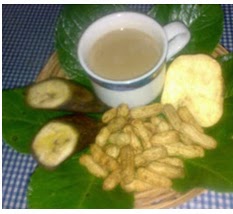
When we arrived at the hotel, I got my first taste of local food, to be exact Sundanese food. The people of Bandung are mainly Sunda people, or Sundanese. The food here to me is quite interesting. What I enjoyed was boiled potato and boiled peanuts, and the drink that went with these, known as bajigur, is certainly an eye-opener. Bajigur is a sweet drink served hot, made from brown sugar and coconut milk with slices of young coconut meat.

After that, I checked into my room, and looked forward to a good night's rest. The first day of conference awaits when the new day begins.

Destination Bandung

It has been a while, over a year to be exact. In just over twelve hours time, insha-Allah, I will be travelling again. This time to Bandung, Indonesia for a conference hosted by Universitas Islam Negeri Sunan Gunung Djati (UIN SGD). I did not travel overseas during my first year of service, but now, just under two months into my second year, I will be going overseas for the first time as a university academician.

Truth be told, I am not sure what to expect. This is my second Indonesian trip. The first trip was over a decade ago, and it was to Padang in Sumatera. I will be in Bandung from Monday and will be returning to Malaysia on Thursday.

If I have the opportunity, I will be updating my blog and Facebook page from Bandung.

Thursday, October 17, 2013

Travelling again

It has been over a year since I travelled anywhere. The last time was to Hamburg, and that was in June 2012, a few months before I joined the university as a full time academic staff. Now, due to my academic commitments, I will be travelling again.

At this age, frankly, I prefer not to travel too much. That is why I feel three overseas trips in the span of four months can be overwhelming. In between these, I have two domestic outstation trips. Nonetheless, I try to think positive. At the very least, the trips will provide some new experience. Hopefully, I will be able to establish some networking as well.

At the end of this month, I will be off to Indonesia - specifically, Bandung - to attend a seminar co-organised by Universitas Islam Negeri Sunan Gunung Djati (UIN SGD) and the Academy of Islamic Studies, University of Malaya. I will be presenting a paper there.

At the end of December, I will be heading to Tokyo, Japan to attend a conference co-organised by Waseda University and the Asia-Europe Institute, University of Malaya. I am also scheduled to present a paper in this conference.

Less than a couple of weeks later, I will be flying to Hamburg, Germany to attend an international workshop on bioethics organised by Universitรคt Hamburg and the University of Oxford. The workshop will discuss and review a number of papers, one of which is co-written by myself, to be published in an international journal called Die Welt des Islams (translation: Journal of the Study of Modern Islam).

In the middle of these international trips, I will be going to Gambang in Pahang to give a short briefing on a research project on organ donation, and later to Kota Bharu in Kelantan to give a lecture as part of a master's course at the university's Nilam Puri campus. These two will take place in November.

I am also involved with at least three seminars as co-author of papers - one in Nilai, Negeri Sembilan; one in Kuala Terengganu, Terengganu; and one in Kuala Lumpur. Fortunately, my co-authors will be presenting the papers.

In many ways, I am enjoying my life as a full-time academic. It reminds me of the days when I was with the Institute of Islamic Understanding Malaysia. I am now in my second year at the university, and looking forward to many more years here. Insha-Allah.

Tuesday, April 13, 2010

Baggage handling at Narita

One of the things that impressed me upon arrival at Narita Airport could be seen at the baggage area. I am sure many of us are familiar with carousels that carry luggage or baggage of passengers who had just disembarked. So far, I have been to a number of airports - almost all airports in Malaysia, Padang in Indonesia, Rome in Italy, Cairo in Egypt, Algiers in Algeria, and Heathrow, Gatwick, Stansted, Glasgow, Belfast and Cardiff in the UK. But Narita (and perhaps all airports in Japan) impresses me the most.

Passengers' baggage are all neatly stacked and arranged in a uniformed manner on the carousel. It looks as if all the baggage are lining up neatly to be picked up by passengers. It's a small thing, I know. Nevertheless, I am impressed. The Japanese airport workers took the trouble of arranging the baggage neatly on the carousel, rather than just putting the baggage on the carousel haphazardly.

Not only does this make everything looks neat and proper, it also gives confidence to passengers that their baggage are handled with care, and not being thrown around as if they were not important.

Sometimes, it is these "small" things that give us some peace of mind.

Tuesday, April 06, 2010

Some initial observations in Japan

When one goes to a country with an entirely different culture, one would certainly notice a lot of uniqueness and differences on life in that country. This is my first trip to Japan. I have been to a few other countries before, but they were either European countries or Northern African countries, on top of neighbouring countries like Singapore and Indonesia.

In all honesty, I expected Japan to be way different compared to the other countries that I have been to. And it certainly is obvious from the moment the aeroplane touched down on the tarmac of Narita Airport. As the plane was taxiing to the disembarkation bay, I noticed the airport workers on the tarmac bowing to the plane passing by as a mark of respect. Similarly, when I boarded the bus from Narita to Shinjuku, every time the bus was about to move to the next stop, the attendant at the stop would bow down in respect. I find this aspect of the Japanese culture interesting, as it seems that respect is embedded within their society. They do it because showing respect is a part of their norm. It is not something that is forced on them - at least, that's how I view it.

After two days in Tokyo, I have done quite a bit of travelling in order to meet up with Malaysian students around the capital city. Here, I get to experience first hand the well-known efficiency of Japanese transportation. The accuracy and efficiency is excellent, bar none. Honestly, if public transport in Malaysia can be half this efficient, I think most of us would feel more than happy.

Cleanliness is again another enviable trait of the Japanese people. You could hardly see any litter or cigarettes being thrown on the streets, walkways, trains or underpasses. I noticed that almost all parts of the city that I have gone to have signs that forbid people from smoking on the streets. Do this in Malaysia, and suddenly you will get complains left, right and centre.

Another fascinating observation is the reading culture. In the past, I actually envisaged that almost everyone who commutes would be reading a book when they are in the trains or buses. However, this is not the case (at least from my first two days of observing). About half of the commuters would read (books, comics, newspapers or magazines), but interestingly the other half would be busy texting messages on their handphones. I guess with the advent of technology, people have begun to shift from reading books to texting messages.

I have about two more weeks to go. I am pretty sure I will get the chance to experience more of the Japanese way of life. I will certainly jot them down here if I have the opportunity.

Monday, March 23, 2009

New maid

My maid from Indonesia finally arrived on Monday. I hope this new one will work out well for us. It's not an easy task getting the most suitable maid for the family.

Thursday, March 19, 2009

Have passport will travel

I don't travel much. I don't like travelling really. Most of my travels are work or study-related.

My first passport was made when I was 11. At that time, I was living in Johor Bahru and the school had organised a study trip to Singapore. So, I made my first passport in order to enter the Lion City.

My second passport was made when I was 17. This time around, I needed the passport since I was leaving for the UK to further my studies.

My third passport was made in 2003. I needed the passport because I was involved in meetings and conferences in Indonesia, Egypt and Algeria.

On Tuesday, my boss told me (before sending me home) that I should be prepared for a couple of overseas trips in April and May. I just said "okay" without thinking much about it. After all, it is part of my work. Then when I got home, I noticed that my passport is no longer valid. Looks like I have to make a trip to the Immigration Department very soon to get my passport renewed.

Wednesday, November 05, 2008

Expensive help

Maids or domestic helpers are virtually a must these days for Malaysians, especially in big cities where both husband and wife work. Unfortunately, it is difficult nay, impossible, for us to find local helpers. Most locals prefer to work in factories where the pay is better - and really, this is only logical.

As such, we have to resort to foreign helpers especially from Indonesia. I was surprised therefore, when I was told this morning that the cost of hiring a maid has sky-rocketed if we use agencies. Of course, the alternative is to source for the helpers ourselves, and take care of all the bureaucratic procedures on our own. That way, we can reduce the cost.

For me, I prefer agencies for two reasons. Firstly, I find the process of sourcing for maids and applying for their permits a bit tedious. I know this is a sorry excuse, but I just don't have the patience for this sort of thing. Secondly, and more importantly, most agencies train their maids for two months before they are hired. The training involves a lot of things such as familiarising themselves with Bahasa Malaysia, hands-on training in taking care after babies and infants, using electrical appliances common in Malaysia, etc.

From my personal experience, the training is a lot of help when the helpers come to work for their employers. Miscommunication and the time taken for them to settle down into their jobs are greatly reduced.

However, because of perceived bad treatment that the Indonesian helpers receive in Malaysia, and because of the lure of higher wages in other countries such as Singapore, China and Saudi Arabia, most Indonesians prefer to work in these countries. This resulted in lack of manpower supply for domestic helpers to Malaysia. Even when they want to come to this country, they prefer to work as restaurant helpers, cleaners, factory workers and construction workers - where the freedom is greater.

I was told this morning that it now costs RM8,000 to get a helper through an agency, and their monthly wage is now RM600. So, for a two-year contract, an employer would have to fork out nearly RM20,000 for one domestic helper.

If we were to spread this over two years, that would come to about RM833. Wouldn't an SPM holder want to work with this wage (accomodation and meals included)?

Thursday, September 13, 2007

When plates collide

I arrived home from the masjid after the terawih prayers last night only to be greeted with news of an earthquake that hit the west of Sumatera. None of us in our area noticed the tremor that occurred around 7.15 yesterday evening. Only those living in high-rise buildings felt the tremor which measured at 8.4 on the Richter scale. And at around 7.50 this morning, another earthquake with a magnitude of 7.8 on the Richter scale hit western Indonesia.

My prayer goes to the victims of the earthquake in Indonesia. One of the worst hit places this time is Padang in the province of West Sumatera. I was in Padang a few years back. It is a coastal city rich in history, culture and intellectual heritage. One of Nusantara's greatest scholars came from this region: Allahyarham Professor Hamka, someone whose thoughts and ideas I greatly admire.

I did geology in my first two years of university. One of the first things that we learnt in geology was on the theory of plate tectonics. When I read about the news of the earthquake, I suddenly remembered this interesting theory. A country like Indonesia is definitely prone to earthquakes. This is because most of the Indonesian islands are situated on the very edge of a tectonic plate known as the Eurasian Plate which is colliding with another tectonic plate called the Australian Plate. Collisions of tectonic plates would result in earthquakes. What I wrote here is merely a concised version of the theory of plate tectonics, but if anyone is interested, the details can be read here.

Looking back, I have written quite a bit on earthquakes in this blog. The entries can be read here, here, here and here. Personally, I believe that the earthquakes will continue to happen from time to time. I don't think we can stop earthquakes from happening. The real question is how well-equipped are we to prepare for an earthquake and manage the aftermath?

Tuesday, December 26, 2006

Preserving the delicate balance

Today marks the second anniversary of the tsunami that devastated much of Southeast Asia, South Asia and parts of Africa. Malaysia was not spared as parts of the west coast of the Peninsular was hit as well. Perhaps, in modern history, the country has never seen such a devastation.

On this second anniversary of the tsunami, Malaysia - especially the southern part of the Peninsular - is still reeling from the aftermath of the big floods. As people are taking stock of their losses, more floods are forecasted unfortunately. While floods are almost the norm during the monsoon season especially in the east coast, this year's floods are extraordinary and caught many people unprepared. Many people are saying that the floods are a result of global warming. For instance, Martin Khor's piece in The Star certainly hit the nail on its head.

I, for one, am inclined to believe that whatever that is happening (not just in Malaysia, by the way), is our own doing, albeit indirectly. Just look at the problems around the world such as the floods and landslides in Indonesia, and the thick fog in London, just citing a couple of examples. The climate imbalance may not just be in the form of catastrophes, but also welcome changes in the weather. My former lecturer in Glasgow, John Galloway, wrote to me saying that this year's winter in Scotland has been pretty warm, which is much to the liking of the Scots.

It would probably be somewhat morbid to assume that more catastrophes as a result of global warming are on the way. Like it or not, we have to be ready for the worst. Everything in this world has been created in perfect balance and harmony by the Almighty Creator. Upset this delicate balance, and we'll end up at the receiving end of nature's wrath. What is happening now may well be the result of our own doing for the past many decades.

I believe the following excerpt from an article I wrote which appeared in the book, New Knowledge: Research and Development in the Muslim World (2004) would best conclude this blog's entry as a reminder to us all:
All natural resources and creations of God on this planet are made for mankind to utilise and develop for the betterment of this world... Man is capable of free action to utilise all resources that may achieve individual and collective perfectness... However, Islam underlines the importance of utilising technology with great care and caution so as to avoid destruction, as stated in the following verse (Surah al-Rum: 41), to the effect that: 'Mischief has appeared on land and sea because of (the meed) that the hands of men have earned, that (God) may give them a taste of some of their deeds, in order that they may turn back (from evil).'
[pg. 161]

Friday, December 01, 2006

Did anyone feel it?

Bernama reported that northern Sumatera was hit by an earthquake. Some parts of KL, PJ and Penang felt the tremor around mid-day today. Anyone felt the tremor? I must have been submerged in my work that I didn't notice it until I read the news report after the Friday prayers.

Fortunately, no tsunami is expected out of this 6.6 on the Richter magnitude scale tremor.

Thursday, June 01, 2006

Movers and shakers

The past few days have been filled with reports of earthquake and landslide.

First, it was the Yogyakarta 6.3 on the Richter scale earthquake last Saturday, where it is reported that the official death toll till yesterday stands at 5,846 people.

Then yesterday, as I was resting at home after the 5-hour drive from Kedah to KL, a landslide hit Kampung Pasir which is just a kilometre or so away from my home. So far, news reports state that two people are found dead while 2 children are still missing.

Before I rant any further, let us first offer our condolences to the victims. For those of us who are Muslims, let us recite the Umm al-Kitab.

Al-Fatihah.

It goes without saying that what happened really is nerve-wrecking. For someone who doesn't go through these ordeals, these earthquaking and landsliding matters are already scary. I can't imagine what it's like for those who have to go through these.

In one of my earlier posts touching on earthquakes, I already stressed on the need for us to really prepare ourselves. Are we ready when an earthquake hits? Are we sure that our rescue protocols are in order? Are we confident that an earthquake will not hit Malaysia?

While it is true that Malaysia lies just outside the Pacific Rim notorious for its volcanic and tectonic activities, we're actually not immune to earthquakes. The earthquake may occur thousands of kilometres away, but we can still be affected by the tremor. Just to highlight this concern, take a look at the risk areas in Southeast Asia should an earthquake hit (right). The blue areas are areas of the highest risk, and you can see that we're living in a high-risk area. The map is scanned from the National Geographic magazine.

As for landslides, I don't know what else to say. I was in the UK when the Highland Towers tragedy struck. I can still remember vividly how it made British headline news. My housemates and I watched in disbelief that something like that could have happened. And apparently, it keeps on happening, again and again and again... in the same area.

Looks like our people just don't learn.

Wednesday, April 19, 2006

Earthquakes: Are we ready?

Just finished reading the latest National Geographic. Interesting articles on predicting the next big earthquakes. There's even a map detailing a global view of earthquake risk.

Remember when we were in school, when studying Geography, we were taught that Malaysia is fortunate to be outside the Pacific Rim, thus free and safe from earthquakes? Well, not according to the map in National Geographic.

The map divides the risk into two categories: high risk and low risk; and further divides each category into four sections depending on population density. Therefore, in a high risk area, the danger is greater when the population is bigger. Makes sense - common logic after all.

Now, the interesting part for me is when we scrutinise the map. I find it quite disturbing to note that from Penang up north down to Melaka (as such includes Kuala Lumpur), the map states that these parts (west coast of Peninsula Malaysia) as well as half of Sabah (on the eastern coast) are considered vulnerable to earthquakes devastation. In other words, very high risk areas.

Scary, huh? So with this new insight, we can scrap what we learn in school.

But more seriously though, are we prepared to face earthquake risks? Are our buildings strong enough? Are our elevated highways secure enough? (Think MRR2). More importantly, are we ready to face something like an earthquake?

Remember when we were hit by the Tsunami? (Again, we were taught in school that Tsunami only happens in Japan). We were clearly taken off guard. That time, we were fortunate because the devastation was not as big, simply because we were protected by Sumatera.

But just imagine the ramification if an earthquake were to hit at the heart of KLCC.

Nightmarish thought indeed.

Monday, March 27, 2006

Of hailstones and golden rain

Remember the Malay adage "hujan batu di negeri sendiri, hujan emas di negeri orang"?

Realise how we often complain about how things are terrible and horrible here in our country?

Well, this is so often the case until and unless we see the state of affairs in other countries. I had the privilege to visit several countries in the past 3 years. Not counting the UK where I lived for 5 years, and not counting the countries where I stopped for transit (India, Italy), I have been to 2 North African countries (Algeria, Egypt) as well as the biggest Muslim country (Indonesia).

What I can say is that when you have been to these countries, you'll realise that we're indeed very lucky. Sure, we are not perfect. But that doesn't mean that we're in the pits. Things could be better, but it won't get better if we just complain.

I think once in a while we should take time out to count our blessings. Oft-times we only remember these blessings when we no longer have them.

Indonesia may be the biggest Muslim country. Algeria may be a country with a rich and colourful history. Egypt may be the cradle of civilisation. But believe you me, from where I'm standing, we are indeed more blessed compared to them.

Hailstones indeed...